
As we say goodbye to 2023 and welcome in 2024, I am excited to share The Principal’s Desk final blog of the year: 5 educational concepts to leave behind, expel from school, terminate from existence, and to move away from in 2024! This is the 8th installment of this long running and popular blog series, having well over 100,000 downloads, dating back to 2017.
Some of these topics are new to this series, while others might be updates to past entries.
Well, here you go … 5 educational concepts to eliminate for 2024 …
- Moving successful administrators after just a few years to take over an under-performing school.

Frequent rotation of school principals within a district after just a few years can have detrimental effects on the overall stability and continuity of educational leadership. Principals play a crucial role in shaping the school culture, implementing long-term strategies, and fostering a sense of community within the neighborhood they serve as well as with the staff they work with day in and day out. When principals are frequently moved, it disrupts the relationships they’ve built with staff, students, and parents, hindering the establishment of trust and effective collaboration. Educational leaders need time to understand the unique dynamics of a school, identify areas for improvement, and implement sustainable changes. Constant turnover may lead to a lack of consistency in the implementation of policies and educational initiatives, impacting the overall effectiveness of the school district. Moreover, a stable leadership environment allows for the development and execution of a coherent, long-term vision as well as innovation that is essential for the continuous improvement of educational outcomes.
- Not permitting teachers to wear jeans to work.

First of all, it’s 2024. Time to get over this once and for all. Teaching is supposed to be messy, energetic, and to include elements of movement. K-12 students are not sitting in a lecture hall. They move around. Some of them, especially the little ones, move quite fast. By relaxing dress codes to include jeans, schools send a message of trust and professionalism, acknowledging that a teacher’s effectiveness is not determined by their attire. This shift can foster a more relatable and approachable atmosphere between teachers and students, breaking down unnecessary barriers. Furthermore, recognizing the diversity of personal styles and preferences among educators allows for a more inclusive workplace culture.
Lastly, have you ever tried to teach kindergarten or 1st grade in a suit or long skirt day in and day out? It doesn’t work.
- Using a 100 point grading system

The 100-point grading system is widely considered outdated for various reasons in modern education. One major drawback lies in its lack of precision, making it difficult to discern subtle differences in student performance. Additionally, the subjectivity inherent in grading on a 100-point scale can lead to inconsistencies across educators. This approach tends to emphasize summative assessments and final outcomes, neglecting the importance of formative assessments and the learning process. Check out this blog on mastery learning. The high-stakes nature of this grading system may contribute to heightened stress and anxiety among students, as perfection becomes the focus rather than a deep understanding of the material.
Consider this:
A student gets the following grades on five assignments with equal weighting. What do you think their final grade is?
- 90/100
- 85/100
- 45/100
- 80/100
- 80/100
Based on the 100 point grading scale, this student would receive a “C” (76%), even though 4 out of 5 assignment grades were above an 80%. Consider the possibility that for the lowest score, the student didn’t get a good night’s sleep, was under the weather, or just didn’t perform well on that particular day.
4. School boards that don’t reflect the community

First off, I served as a school board member for five years. I was shocked as to how the notion of the rubber stamp truly exists in our field. Backdoor politics and not wanting to rock the boat is leaving our schools high and dry.
School boards are often criticized as antiquated institutions due to several reasons. One significant concern is their perceived lack of responsiveness to the evolving needs of modern education. The bureaucratic nature of school boards can result in slow decision-making processes, hindering the timely implementation of innovative teaching methods, technology integration, and educational reforms. Furthermore, school boards with their traditional hierarchical structures, may not adequately represent the diverse voices within a community, potentially marginalizing certain perspectives. Moreover, the election-based system for choosing board members can lead to politicization, where decisions are influenced by political agendas rather than a focus on educational excellence.
As education continues to undergo rapid changes, there is a growing call for more flexible and dynamic governance structures that can adapt swiftly to the demands of 21st-century learning, fostering a more responsive and inclusive educational system. These structures include more site-based decision making, education cooperatives, and community advisory boards.
5. Banning all cellphones use in school
Again, just like allowing teachers to wear jeans, it’s 2024, we need to get over it. Students should be allowed to use cellphones in school for educational purposes as these devices can serve as powerful tools to enhance the learning experience. First, smartphones provide instant access to a wealth of information, allowing students to conduct research, access educational apps, and engage with online resources. This access fosters independent learning and helps students develop digital literacy skills crucial for the modern world. Second, cell phones facilitate communication and collaboration among students, enabling group projects and discussions. They can also serve as organizational tools for managing schedules, assignments, and reminders.
The National Institutes of Health state that 95% of teenagers in The United States have access to a cell phone, with 83% of them indicating that they use it to learn new things.
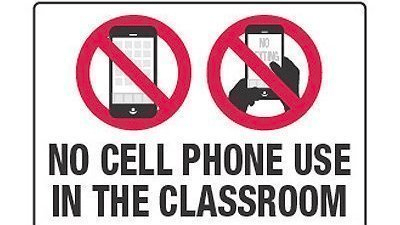
Embracing cell phones for educational purposes acknowledges the changing landscape of technology and prepares students for the real-world use of these devices in various professional and academic settings. By integrating cell phones into the learning environment responsibly, educators can harness their potential to enrich the educational experience and better prepare students for the challenges and opportunities of the digital age.
Think about it: How often do you use your cell phone for something work related?
The Principal’s Desk was founded by Dr. David Franklin. Dr. Franklin is a education consultant, an experienced school administrator, education professor, curriculum designer, published author and presenter at national and international education conferences. He is also the co-author of “Can Every School Succeed” and the upcoming release: “Advice From The Principal’s Desk”.
 THE PRINCIPAL'S DESK